
It is shocking to see how many multinational companies in Japan fail to choose a social media outlet for their marketing activities =from Ads to content marketing. As if they are not interested in connecting with local customers and users in Japan, many companies simply choose the platform that worked in their own country.
But it’s mandatory to go beyond the assumptions of global content planning.
Your company might have cracked the code and is getting high impressions, high exposure. But not many high quality leads…
The real challenge is understanding whether your leads are engaging with your brand or simply scrolling past for a quick distraction.
If you are struggling with your company’s social media strategy for Japan market, this blog/cheat-sheet might be for you.
Let’s get started!
Contents
- 1 Overview of Japanese Social Media Use: Data from the Ministry of Internal Affairs
- 2 Top Social Media in Japan : A Marketing Cheatsheet
- 3 LINE : The Most Used Social Media in Japan
- 4 How Businesses Use LINE
- 5 YouTube – Wide Age Range Penetration
- 6 Facebook – Still the Strongest Business Social
- 7 Instagram – Increasingly Popular among Over 60
- 8 Twitter (X) – Thought Leader Playground
- 9 LinkedIn – Wannabe Market Leaders
- 10 TikTok – Young and Vulnerable
- 11 Pinterest – “Thoughtful” Lifestyle
- 12 Japanese Version of Reddit or a Similar Site
- 13 Final Thoughts
Overview of Japanese Social Media Use: Data from the Ministry of Internal Affairs
Social media usage in Japan is underpinned by widespread smartphone adoption and a deeply embedded internet culture. Over 90% of households own a smartphone, and internet penetration rates exceed 85% across most age groups. Notably, 95% of individuals aged 13 to 59 are active online, with even over 60% of people aged 70 and above using the internet. With such extensive connectivity, nearly everyone in Japan is online, making the social media marketing strategy priority for businesses in Japan.
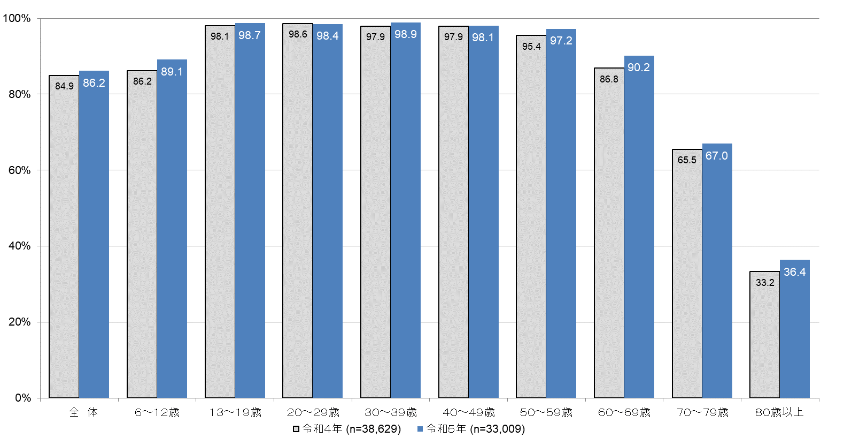
The latest data from the Ministry of Internal Affairs published in 2024.
Social Media Usage by Age Group in Japan
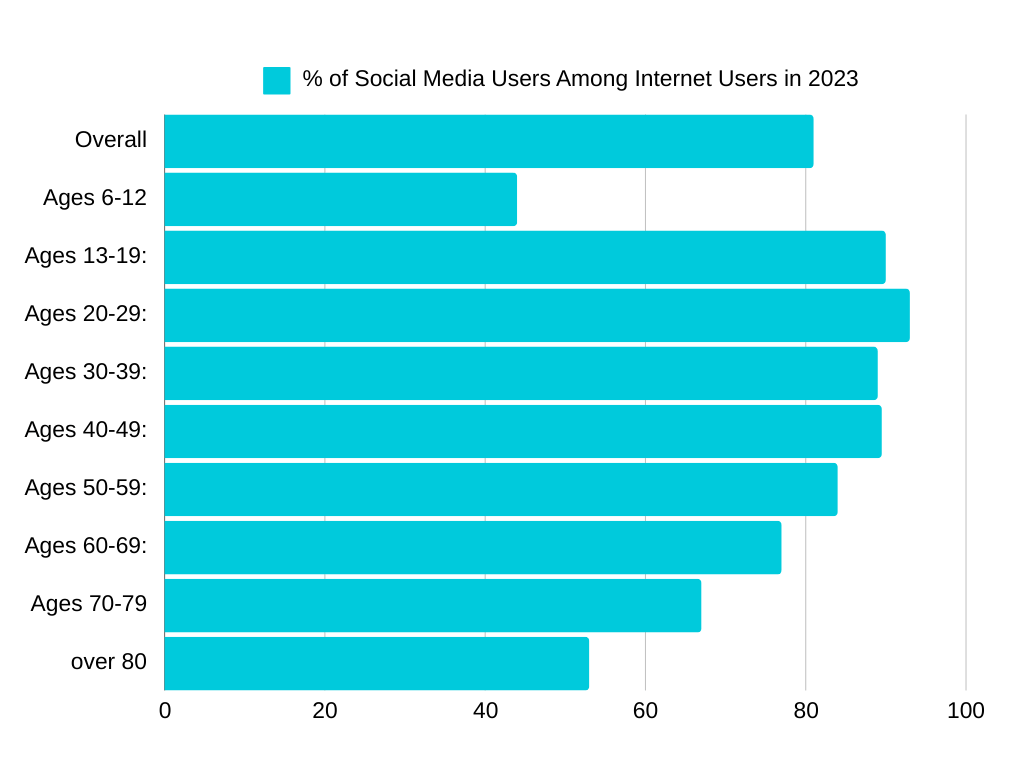
Social Media Channels are widely adopted in Japan, with 80.8% of internet users actively participating. Here’s a closer look at age-specific usage trends:
- 13 to 59 years old: Over 95% of individuals in this age range use the internet, and a significant majority actively engage on SNS platforms.
- 6 to 12 years old and 60 to 69 years old: Internet penetration exceeds 85%, and many in these groups also use SNS for communication or entertainment.
- 70 years and older: Despite lower internet penetration, over 60% of individuals in this age group access the internet, and a noteworthy portion are active on SNS.
LINE & YouTube Dominating: Key Findings about Social Media in Japan
- LINE: The leading app for messaging, payments, and daily life tasks, LINE is a cultural staple in Japan. LINE enjoys the highest penetration, cementing its role as a multi-functional tool for both personal and professional purposes. We will see how LINE acts as a powerful marketing tool later in this article.
- Twitter and Instagram: Popular for networking and real-time updates, with younger audiences favoring these platforms for visual and trending content.
- Facebook: While declining among younger users, it remains a go-to platform for business and professional networking.
- YouTube: A universal platform, widely used for video content by people of all ages.
Demographics and Social Media User Behavior in Japan
- Younger generations lean towards Instagram and Twitter for dynamic, visually engaging interactions.
- LINE’s versatility ensures its presence across all age groups, making it a default communication tool.
Beyond user numbers, the purpose of social media usage in Japan plays a crucial role. Today, social media functions more as a media platform and less as a tool for genuine social interaction. With most content resembling professional or curated posts rather than personal connections, businesses need to analyze better the behavior behind each social media channel to choose the right social media and approach.
Let’s take a closer look at how Japanese users engage with each platform and how businesses are tapping into their unique characteristics.
Top Social Media in Japan : A Marketing Cheatsheet
In this article, I compare the top social media platforms in Japan that companies can use to build brand presence, drive engagement, and ultimately increase conversions. Below is a cheatsheet listing the platforms covered in this article.
| Social Media Platform | Target Audience | Best for | Posts & Engagement Format | Key Features | Risks/Challenges | Ideal for Businesses in |
|---|---|---|---|---|---|---|
| LINE | General, All Ages | Communication, Customer Support, Lead Nurturing | Real-time text, voice, video chat, Group/community chats | Step distribution for lead nurturing, Integration with business tools | Scams, privacy concerns, Over-reliance on messaging | E-commerce, Lifestyle, B2B/B2C |
| YouTube | All Age Groups | Video Marketing, Brand Storytelling | Long-form videos, Shorts, Live streams, Tutorials | Large OTT service, Video search engine | Content production costs, Algorithm dependency | Education, Tech, E-commerce, Influencers |
| Twitter (X) | Young to Middle-aged, Tech-savvy | Real-time Engagement, Customer Service, Thought Leadership | Short text-heavy posts, reposts | Fast updates, Popular for news, Public conversations | Anonymity leads to trolling, Negative backlash | Tech, News, Media, Nurturing, Customer support |
| Millennials, Gen X, 35+ | Brand Engagement, Personal Branding | Text, images, videos, events, live streams | Groups, milestone sharing | Declining popularity with younger demographics, Privacy concerns | B2C, Brand Engagement, Event Marketing | |
| Young to Middle-aged, Trend-driven | Visual Branding, Engagement, Influencer Marketing | Photos, videos, stories, reels | Strong influence on purchasing decisions, Highly visual | Algorithm changes, Content production demands | Fashion, Lifestyle, Beauty, E-commerce | |
| TikTok | All Ages, Diverse Demographics | Short-form Content, Viral Marketing | Short-form videos featuring music, trends, challenges | Algorithm-driven discovery, Highly engaging content | Content production demands, Short lifespan of trends | Youth Marketing, E-commerce, Entertainment |
| Predominantly Female, 20-40 | Visual Branding, Inspiration, Product Discovery | Images, Infographics, Pins | Powerful search engine, Visual inspiration | Limited reach outside certain industries | Fashion, Lifestyle, Home decor, E-commerce | |
| Yahoo! Chiebukuro | General, All Ages | Q&A, Market Research, Consumer Insights | Short Q&A posts, Concise responses | High volume of user-generated questions and answers | Limited detailed discussions | Market research, B2C insights, Local businesses |
| Girls Channel | Female, 20-40 | Consumer Behavior Insights, Community Engagement | Forums, Discussion threads | Real-time topics, Focused on female interests | Limited reach outside specific demographic | Beauty, Fashion, Wellness, Lifestyle |
| Professionals, B2B | Networking, Thought Leadership, Business Development | Text, long-form articles, image posts, job updates | Professional networking, Career milestones | Low engagement in Japan outside multinational companies | only for English-speaking Japanese |
LINE : The Most Used Social Media in Japan
LINE is probably the only social media in Japan that people use primarily for socializing rather than consuming content. But because of this closed socializing nature, it brings in high conversion marketing opportunities and serious issues.
LINE as Japanese alternative to Whatsapp and Discord
- What it’s like:
LINE is the WhatsApp of Japan, but for group chats, it functions more like Discord. It allows real-time text, voice, and video communication and is widely used for both casual and business purposes. - Posts & Engagement Format:
- Real-time text, voice, and video chat.
- Group and community chat functionality.
- What people do there:
Users join LINE groups to chat in real time, make calls, and participate in niche communities. It’s also a platform for understanding target personas, as professionals and analysts often subscribe to groups linked to specific industries or companies.
LINE as a Growing Marketplace—With Risks
LINE has also become a hotspot for scams due to its anonymity. Fraudulent activities such as investment scams, illegal jobs, and information product schemes are common, made easier by disposable phone numbers. In response, LINE Corporation has a dedicated scam alert page: LINE Fraud Alert.
Despite these risks, LINE is also a legitimate and powerful platform for businesses, especially those experienced in nurturing leads through email marketing.
How Businesses Use LINE
Many companies leverage LINE’s L Step feature, a marketing method similar to automated email sequences.
Best Nurturing Channel
Known as ステップ配信 (step distribution), it automates message delivery at scheduled intervals to educate and engage potential customers. For example:
- Send a welcome message upon subscription.
- Share product information three days later.
- Offer a coupon six days later.
This method, originally popularized in email marketing, is proven to drive customer education and conversions effectively.
Who is LINE for?
LINE is perfect for businesses that excel at nurturing leads via email marketing and want to expand into a platform that integrates messaging with social connectivity. Its step delivery function makes it especially useful for businesses that rely on relationship-building and gradual customer education.
YouTube – Wide Age Range Penetration
- Link: youtube.com
- What it’s like: The modern-day alternative to TV. With the rise of connected TVs, YouTube is not just a massive UGC platform but also the largest OTT service and search engine. Its user base spans all age groups.
- Posts & Engagement Format: Long-form videos, shorts, live streams, and tutorials.
- What people do there: Watch tutorials, product reviews, music videos, and vlogs. YouTube excels at thoroughly educating audiences, whether through engaging storytelling or practical guides.
- What business is YouTube for:
- Businesses that simplify complex information into clear, audience-friendly educational content.
- Channels that succeed in customer acquisition often have a well-defined target audience, attention-grabbing titles and thumbnails, and content tailored to viewer interests.
- Short-form videos are increasingly popular, both for organic reach and advertising, as influencers can create branded short-form content for businesses.
Facebook – Still the Strongest Business Social
- Link: facebook.com
- What it’s like: Think of Facebook as LinkedIn for Millennials and Gen X. People over 35 use it as a digital business card to showcase life milestones and humblebrag, while Gen Z calls it OWAKON—something of the past.
- Posts & Engagement Format: Text, images, videos, events, and live streams.
- What people do there: Share personal updates, join groups, binge-watch viral videos, and repeatedly comment on the same 20 friends’ posts.
- what business is Facebook for?: Facebook is a solid platform for B2C brands looking to engage with a broad audience.
Instagram – Increasingly Popular among Over 60
- Link: instagram.com
- What it’s like: Interaction is key. Instagram is driven by user-created videos, where people consume audiovisual content, react, and build loose connections. They share their own content in hopes of receiving similar engagement in return.
- Posts & Engagement Format: Photos, videos, stories, and reels.
- What people do there: Share snippets of their daily lives, scroll endlessly during breaks, and double-tap on posts that catch their attention. In today’s world, where social media shapes consumer behavior, Instagram has the strongest influence on purchasing decisions.
- what business is Instagram for: It’s the ideal platform for being discovered through visual content and nurturing potential customers through ongoing content engagement.
Twitter (X) – Thought Leader Playground
- Link: twitter.com
- What it’s like: A space for anonymously whining into the void.
Its popularity in Japan stems from the anonymity it offers, which aligns with the nation’s risk-averse culture. Many Japanese people use Twitter to discuss work problems, while they turn to Facebook for showcasing the brighter sides of their lives. - Posts & Engagement Format: Short, text-heavy posts.
- What people do there: Share thoughts, keep up with breaking news, jump into trending topics, and vent frustrations while connecting with like-minded individuals. It’s great for thought leadership, building a following through relatable posts, and occasionally employing 炎上商法 (controversial marketing tactics).
- What business is Twitter for: Suitable for both B2C and B2B. B2C brands can use company accounts to post edgy, engaging content, while B2B efforts often rely on employee accounts to share thought leadership and position themselves as industry authorities. Regular Japanese users tend to complain here, making it a perfect platform for finding topics to develop into video or blog content for influencers.
LinkedIn – Wannabe Market Leaders
- Link: [linkedin.com]
- What it’s like: A haven for the “highly ambitious” crowd. Only that small number of highly ambitious employees from multinational companies’ Japan branches and freelancers engage — it’s like performing on stage at a concert where no one’s really listening. Employees of traditional Japanese companies rarely use it. Almost only those fluent in English tend to engage, often posting only when they change jobs. Active networking is relatively rare.
- Posts & Engagement Format: Text, long-form articles, image posts, job updates, and professional achievements.
- What people do there: Most people sign up because it’s seen as a must for business professionals. A small portion uses it for job hunting, and an even smaller group posts about promotions or career milestones—something that’s more commonly shared on Facebook in Japan.
- What business is LinkedIn for: LinkedIn is ideal for B2B services looking to connect with C-level executives from global companies in Japan, especially for professional networking and business development.
TikTok – Young and Vulnerable
- • Link: [tiktok.com]
- What it’s like: A reality show where the remote is stuck on shuffle. TikTok’s diverse communities cater to everyone, from students obsessed with study tips to foodies seeking gourmet restaurant reviews, and animal lovers enjoying adorable content. Remarkably, 1 in 3 TikTok users in Japan is aged 25–44, and 25% of female users are homemakers.
- Posts & Engagement Format: Short-form videos featuring music, trends, and challenges.
- What people do there: Users engage by liking, following accounts, or sharing TikTok content on other platforms. According to user behavior surveys, TikTok inspires actions beyond the app itself, including making purchases, trying tutorials, or spreading recommendations across other SNS platforms. Even with zero followers, TikTok’s algorithm ensures your videos are recommended to relevant audiences within its many communities.
- What business is TikTok for: Perfect for B2C businesses wanting to reach diverse demographics through highly engaging short-form content, ideal for both awareness and conversion.
Pinterest – “Thoughtful” Lifestyle
- Link: pinterest.com
- What it’s like: A vision board that never ends, dominated by female users. People pin their aspirational ideas, from DIY projects to dream weddings, most of which they’ll never actually get around to. Beyond being a visual platform, Pinterest is also a powerful search engine.
- Posts & Engagement Format: Images, infographics, and visual inspirations.
- What people do there: Plan weddings, brainstorm DIY ideas, and curate endless home decor goals. While it’s popular for planning, research shows that its largest user base comes from lower-income groups【source】.
- What business is Pinterest for:
- Brands in lifestyle, fashion, and home industries.
- Companies with e-commerce platforms.
Japanese Version of Reddit or a Similar Site
Yahoo! Chiebukuro: The Japanese Version of Reddit
- Link: chiebukuro.yahoo.co.jp
- What it’s like:
Often called the Japanese version of Reddit, Yahoo! Chiebukuro caters to short, concise Q&A exchanges. Unlike Reddit, where users often write detailed essays, this platform thrives on brevity. - By the numbers:
Over 52 million registered users, 280 million questions, and 650 million answers. - What business is it for:
Ideal for businesses looking to gather insights into everyday concerns and frequently asked questions in Japan. A valuable resource for crafting targeted messaging and understanding customer needs.
Girls Channel: The Female-Only Version of Japanese Reddit
- Link: girlschannel.net
- What it’s like:
A women-only discussion forum often considered the go-to platform for B2C brands targeting female audiences. - Why it’s valuable:
With real, up-to-date topics, Girls Channel offers a focused view into women’s pain points and consumer interests. - What business is it for:
Best suited for brands in lifestyle, beauty, wellness, and fashion industries seeking authentic connections with a female audience.
Final Thoughts
When expanding to another country, it is nothing different from when you first launched your business in your own country. You do need to do the research. You do need to understand the customer journey. And place your content on their mental space in a way that they are comfortable with.
That is how your social media marketing localization succeeds within the Japan market.
Look beyond just the number of users and ask yourself if your target audience is staying on that platform to consume your content. People use different social media channels for different reasons, so you need to understand the behavior and thinking patterns of your specific audience.
Differentiate your social media marketing strategy by focusing on the platforms where your audience is most likely to take action, not just scroll passively.
Feel free to contact me if you are thinking of making a change in your social media marketing strategy.
Follow me!